 |
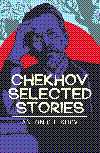
chekhov selected stories
(chekhov)
★★★★ ½
I normally can't be moved to read short stories in my own time, but I enjoyed the movie "an unfinished piece for player piano" by nikita mikhalkov enough to be intrigued by chekhov. I was suprised to be especially endeared by his works … part of what was so endearing was that he likes to write from a naive perspective, like of peasants or children or ticket-collectors, and his skill in writing children is particularly impressive; I would add the stories "children" and "home" to the further reading section of this blog.
"he takes no interest in winning, or in the success of others, because he is entirely engrossed by the arithmetic of the game, and its far from complex theory; 'How many numbers there are in the world,' he is thinking, 'and how is it they don't get mixed up?'" ("children")
I ended up starring most of the stories in the collection but my absolute favourites were "misery," "in the court," "home," and "sleepy." "misery" is the first I would recommend to anyone without spoiling anything. "in the court" is chekhov's best performance at writing boredom, most obviously through "in the court" and most humorously in "a play," and it shows in other stories too.
"it sometimes happens during a lesson on mathematics, when the very air is still with boredom, a butterfly flutters into the classroom; the boys toss their heads and begin watching its flight with interest, as though they saw before them not a butterfly but something new and strange." ("champagne")
"sleepy" is also a favourite because of the great surrealism and violence that contrasts his more often mundane realism. "home" is another notable mention, too; I write more on "home" here. I was also surprised that the translation wasn't so awkward considering this cheap edition doesn't name the translator.
|
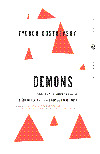 |
demons
(dostoevsky)
★★★★★
[read for bookbug] my 5th dostoevsky, and my 5th dostoevsky translated by pevear & volokhonsky. I know it's not faithful to the author to only read him through the same translators, but if that makes me more of a fan of pevear & volokhonsky than of dosto, so be it. their writing reads so smoothly, that even when they resort to more asbtract words for seemingly simple sentences, it still comes off stylistically consistent with the novel's dreariness rather than reading like the romantic poetics that I never like (I think I can articulate what I don't like about Tolstoy now, he's too sincere, too sentimental). whether that's dostoevsky or the translators I don't know, but it reads so pleasurably to me. and after five dostoevsky novels I'm still impressed by its timelessness. for all the references that assume the contemporary readers' familiarity to its time and place, it should feel alien to me. the dialogue, too, has an alien, almost theatrical exaggeration despite dosto's realist style. its timeless without being universal, and that appeals to someone that doesn't like when the canon is justified for its "universal" themes.
though I'm normally peeved by the reputation that russian novels have of containing too many characters with similar names, I will admit to sometimes struggling to follow who is who this time. I'm embarrassed by how many times I mixed up pyotr stepanovich and stepan trofimovich … but I think the fragmentation of part 1 (small chapters, confusing) led to a satisfying clarity in part 2. I thought the anonymous, impossibly omniscient narrator was interesting, it felt like a silent video game protagonist. there is something interesting to say about that but I can't articulate it yet. the silence of darya and mavriky nikolaevich was also a strange contrast to the blabbering of most dosto characters, I liked that. and I was obsessed with the nikolai/shatov/kirillov/pyotr love triangle, I didn't know the homoeroticism could get better than rodion and razumikhin in crime and punishment. I loved marya, and her relationship to stravogin and shatov, too, and I wanted more of her. I appreciate that dosto's women aren't all the same couple of archetypes, men really struggle writing that.
what I praise the most about dostoevsky is that he is so pleasing to read even when I disagree with him. realistically, I would have more sympathy for the russian nihilists than a conservative christian at the time of tsardom. but I think his complicated class position and his early alliance with the ideas he criticizes in demons allows him more nuance beyond some sort of bourgeois ignorance; only demons could make me take horseshoe theory seriously in any capacity. it's interesting how everything I criticize in jane austen (conservatism and domesticity), I enjoy in dostoevsky …and his satire is too funny to be offensive, his humour is what I think really characterizes his books despite his reputation for dark and violent themes. I was also led to rewatch the movie la chinoise by jean-luc godard which I write more about here.
overall, demons may be my favourite dostoevsky novel, ever, even above brothers karamazov.
|
 |
mrs. dalloway
(woolf)
★★★★★
I take back the "favourite prose" award from pynchon and I return it to virginia woolf, redeemer of british literature. woolf has the most refreshing way to put things. all I was left wanting after orlando was her prose on a smaller scale and this was exactly what I needed, and after suffering through austen for class I found in mrs. dalloway that I could possibly enjoy a simple domestic plot if its written interestingly enough; mrs. dalloway is persuasion if louisa died when she fell (and if 27 wasn't the oldest austen was willing to go to write a mature heroine). I loved septimus and his wife rezia and dr. holmes, they satisfied the deleuze & guattari in me. miss kilman was so much fun too, who satisfied the nietzsche in me. I missed reading a book that always kept a pen in my hand. and woolf inspires me so much to write, I might abandon all my current projects to write of a middle aged woman now, I didn't realize how much I was missing middle aged women from the protagonist role.
|