<
May 2026
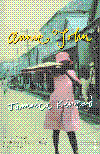 |
Annie John(Kincaid)★★★★[read for bookbug] This was the bookbug reading two months ago but I regretted that I missed it and so I came back to it now. I was charmed. The mother/daughter relationship was so interesting to me. women inherit from their mothers their self-hatred, and this makes mothers complacent to the patriarchy and even vessels for woman-hating. I read on Jamaica Kincaid's wikipedia that her work is often criticized for being "angry," which was funny to me because I thought Annie John was quaint. It is already difficult when white women write nuanced or unlikable female characters (I can't believe Maria from Play it as it lays is thought of as the devil), but it seems like a black women's character will especially be villainized if she expresses any little dissatisfaction with the world. the consensus on the bookbug discord seemed to be that Annie's hatred for her mother was to some degree irrational (whether justified or not) but I thought it was all good and proportionate. even if you are born into the healthiest family in the world, that family functions to impose social repression on you while having the most intimate access to your life, molding you into conformity and complacency; I think that is something to be angry about and it is the source of all teenage angst -- most of us just learn to enjoy it, in the Zizekian sense.
|
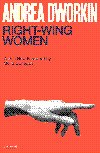 |
Right-wing women(Dworkin)★★★★I expected it to be like feminism or death, a product of its time that isn't really interesting today. I was so wrong, it was depressing how all the issues addressed by Dworkin are just as contentious today, and as one of the most accessible books of feminist literature it goes to show that leftist men don't read shit because they widely maintain the same misogynist ideas described. I was also surprised that the recognition of black women's struggle and intersectionality in general was more than just a footnote somewhere; where american feminism has an edge over the french, I think.
|
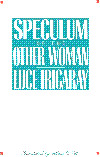 |
Speculum of the other woman(Irigaray)★★★★I'm so glad Sadie Plant deflected me from the Deleuze to Land pipeline and instead into feminism. the first half was a good Freud refresher, and I was endeared by her Lenin "don't laugh!" sarcasm (this is Freud read by Irigaray). I felt like I was reading Lacan again. especially in all the "always already"s of everything, and also the master discourse of Plato's cave. a seminar of his, specifically; Speculum reads very orally. but I don't have the same patience for dissecting her every word as I did in my Lacan phase, I don't know if that means I'm less affected by neuroticism now or if it's laziness. I want to read a secondary source sometime because I don't think I understood most of the book … thought I could get away with not having read a lot of Plato until Irigaray forced pages-worth of his quotations on me in that middle part.
|
 |
play it as it lays(didion)★★★★ ½airplane read. inspiring prose. an american anne desbaresdes. 20th century philosophy is best in french but the modernist novel might be best in english. |
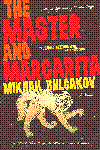 |
The Master and Margarita(Bulgakov)★★ ½"not having any hole to drop through, Kanavkin settled for fingering the hem of his jacket."
|