February 2026
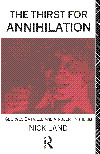 |
the thirst for annihilation: georges bataille and virulent nihilism(land)★★★I had a morbid curiosity for what nick land was doing pre-meth. I didn't understand a lot but there were moments of clarity, so much so that being made to think harder about bataille beyond my first read of accursed share has made his economics of excess and waste for me what is to others self-help stoicism. speculative vs pessimist thinking was illuminating, too ("the speculative model of evolution is one of 'taking over,' the pessimistic model is one of escape; on the one hand the overthrow of oppression-as-exploitation, and on the other the overthrow of oppression-as-confinement"), and I loved the nietzschean death of god as a sort of creative francis bacon scream than something to be semiologically deconstructed or whatever ("it is thus that successfully adapted, tranquil, moderate, and productive reason monopolizes the philosophical conception of thought, in the same way that the generalized robotism of regulated labour squeeze all intense gestures out of social existence;" "for philosophy is a machine which transforms the prospect of thought into excitation: a generator"). and I liked the labyrinth stuff (could it be a sort of sublimity? "no final grid, topology, or terrain, no absolute topology or legislative stratum. there are only scales in which everything happens; a labyrinth which can never be 'placed in perspective' … which is not at all to suggest that it has three dimensions. its depth does not retreat from surface, except as a maze-like complication"). I have to admit that calibre's epub to pdf conversion skipped over some passages but I'm glad I noticed before the part on the death of the author. land's prose is a little annoying, though, and it's funny because he describes bataille's writing as "inelegant" at some point but that's everything this book is. I think the thirst for annihilation was a good start for my renewed enthusiasm for theory after a dormant 6 months of only reading novels, but it wasn't worth neurotically picking apart or anything (I even felt relieved to be finishing it by the end). then I tried reading cyclonopedia again and I got bored again so that's the end of my interest in the CCRU for the most part. another good quote: |
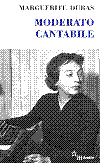 |
moderato cantabile(duras)★★★ ½[read for class] [read in french] the first chapter read cinematically, it stuck with me. it's up there with my favourite genre of women and pianos (piano teacher, autumn sonata, tar). I like a woman that can't pretend to be happy for "surplus enjoyment," women that ruin the vibe. the presentation I had to make about this was stressful; I thought my public speaking wasn't so bad until I had to do it in my second language. |
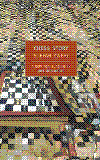 |
chess story(zweig)★★★[read for bookbug] I don't like sports movies and this was a sort of sports book, but I could accept the sportsisms as a vehicle for dr. B's monologue. it has the anime quality of a long backstory told in the middle of the action. It appeared archaic at first for a 20th century novel to have a noble hero descended from schubert's circles defeat an arrogant peasant but it was a satisfying subversion that his skill in chess was so accidental, as if his mastery of whatever topic depended on any random book he could have picked up (hover to view spoilers) and I liked the implied creativity of chess beyond memorizing all the different potential games. the honesty of the bored spectators at the end was charming, too. one thing that was missing for me was that I wanted to see more of czentovic's rudeness because that aspect was sort of only plainly stated. I have also been reading a lot of short stories for a class so I'm a little tired of short fiction, I'm in the mood for something more investing. |
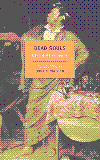 |
dead souls(gogol)★★★ ½I didn't finish part 2 but neither did Gogol. tententikov feels like an oblomov character anyway so I thought I could read oblomov instead. chichikov was also a similar archetype to the money-hoarding brother in Chekhov's "Gooseberries." it seems like russian literary tradition is to write about people the author doesn't like, and this manifests in the form of "monster of the week" in dead souls. it was a lot more lighthearted than I expected when I read the title but it's accurate to the little sample of gogol I got from the silly movie adaptation of "viy." I love love all the absurd extended metaphors and I wrote about them in this blog; I see susan sontag's comparison to Krasznahorkai in the absurd maximalisms. I only wished that the purchase of dead souls was never explained, like the mystery of the whale in melancholy of resistance. |