April 2026
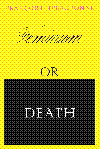 |
feminism or death(d'Eaubonne)★★ ½I read this to take a break from Irigaray but I still expected it to be a little challenging. I wanted theory, which I think is reasonable for something called "ecofeminism," but I got a list of facts and statistics from the 70s. anything else I have to say I said in this blog: I recently read Feminism or death by Francoise d'Eaubonne and I was underwhelmed. She proposes anti-natalism to solve overpopulation. Besides the fact that overpopulation is a myth of the rich to blame ecological collapse on the poor, I am suspicious of the usefulness of her demand (a suspicion of utility that I can thank Bataille for, who also opposes Malthusian economics of lack). We know that the planet has witnessed climate change at the turn of every geological epoch and that it will absolutely outlive this one. It has never been about saving the planet but saving ourselves. and when women's role is already to preserve the species through reproduction, d'Eaubonne's anti-natalism has only repackaged that duty … |
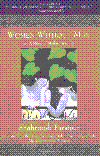 |
women without men(Parsipur)★★★[read for bookbug] stories of women turning into trees have been following me for the last eight months. bernini's sculpture of apollo and daphne in a baroque art class (the first time I heard of the myth at all), seeing Jesse Mockrin's A story told this many times becomes the forest in-person in a gallery, and the concept appearing multiple times in a class on short stories, including "Sans Souci" by Dionne Brand. I like how the last two and women without men extend the metaphor until it disturbs the simplicity of the original myth enjoyed by men. resisting men's understanding is one of the only things we have going for us, I think, as long as it's turned against the mystique they try to make of it.
|